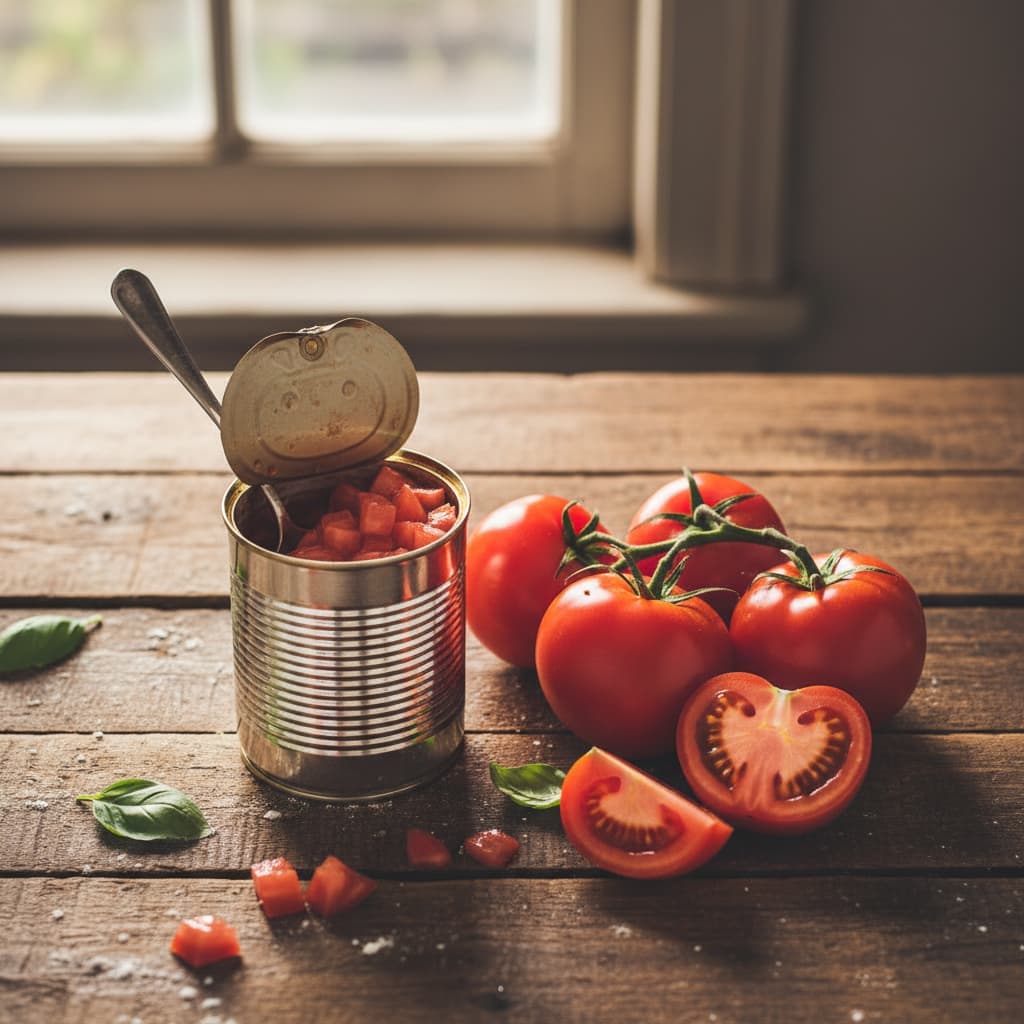
Canned Tomatoes: The Pantry Cook's Secret Weapon
What it is
Canned tomatoes are vine-ripened tomatoes that are peeled, processed, and packed in tomato juice or puree within hours of harvest. They come in several forms: diced (chopped pieces), crushed (broken down, chunky), whole peeled (intact tomatoes in juice), tomato sauce (smooth puree), and tomato paste (concentrated, thick). For general pantry stocking, canned diced tomatoes are the most versatile starting point.
Why it belongs in your pantry
Canned tomatoes solve the biggest problem in pantry cooking: flavor. Rice, beans, pasta, and canned meat are nutritious but bland. Canned tomatoes bring acid, sweetness, umami, and color to everything they touch.
- Nutritionally solid. High in vitamins A and C, lycopene (actually more bioavailable in canned than fresh), and potassium.
- The foundation of dozens of recipes. Chili, pasta sauce, soups, stews, shakshuka, casseroles, curry bases.
- Works with every pantry protein. Canned tuna + tomatoes = puttanesca. Beans + tomatoes = chili. Spam + tomatoes = stew.
A pantry without canned tomatoes is a pantry where everything tastes the same. They are the difference between "survival food" and "actual meals."
How long it actually lasts
- Unopened, pantry: 2-5 years. The high acidity of tomatoes means quality holds well for 2-3 years and is generally safe for 5 years.
- Unopened, past "best by": Safe for 1-2 years beyond the date if the can is intact. The tomatoes may darken and soften but remain usable.
- Opened, refrigerated: 5-7 days. Transfer to a non-metal container. The acid reacts with the can once opened.
- Opened, frozen: 3-6 months. Freeze in portions (ice cube trays for paste, containers for diced/sauce).
Important: The acidity of tomatoes is actually a preservation advantage. The low pH inhibits most bacterial growth, which is why canned tomatoes have one of the best safety records of any canned food.
How to store it properly
Store cans in a cool, dry place, same as every other canned good. Because tomatoes are acidic, their shelf life is slightly shorter than low-acid foods like beans or corn, but still measured in years.
Can condition matters: Discard any cans with deep dents (especially along seams), bulging lids, or rust that has eaten through the metal. Minor surface rust or small dents on the body of the can are fine.
Once opened: Transfer immediately to glass or plastic. Storing tomatoes in an opened can accelerates metallic flavor from the acidic reaction with the metal.
How to use it
- Quick pasta sauce. Sauté garlic in olive oil, add a can of diced tomatoes, simmer 15 minutes, season with salt, pepper, and dried basil. Better than most jarred sauces.
- Chili. Brown meat (or skip it), add diced tomatoes, beans, chili powder, cumin. Simmer 30 minutes. The essential pantry meal.
- Shakshuka. Simmer diced tomatoes with cumin and chili flakes, crack eggs directly into the sauce, cover and cook until eggs set. Serve with bread.
- Spanish rice. Cook rice in diced tomatoes diluted with water, plus cumin and garlic powder. A side dish that transforms plain rice.
- Tomato soup. Simmer diced tomatoes with broth, blend smooth, finish with a swirl of cream or peanut butter (seriously, it works). Pair with grilled cheese.
- Curry base. Diced tomatoes + curry powder + coconut milk (canned) = a surprisingly good pantry curry. Add any canned protein.
- Casserole base. Layer canned tomatoes with cooked rice, canned protein, and cheese. Bake until bubbly. Feeds a family from the pantry.
Cost per calorie
| Product | Price (approx.) | Calories | Cost per 100 cal |
|---|---|---|---|
| Store brand diced (14.5 oz) | $0.80 | 70 | $1.14 |
| Hunt's Diced (14.5 oz) | $1.20 | 70 | $1.71 |
| Store brand diced (28 oz) | $1.20 | 140 | $0.86 |
| Costco Kirkland Organic Diced (8-pack) | $7.00 | 560 | $1.25 |
Canned tomatoes are not a calorie food; they are a flavor food. You don't buy them for calories. You buy them because they make your rice, beans, pasta, and canned protein taste like a meal instead of emergency rations. That is worth every penny.
What to buy
Stock the most: Canned diced tomatoes (14.5 oz or 28 oz cans). The most versatile form. You can always break them down further.
Also stock: Tomato paste (6 oz cans). Incredible flavor concentration. A tablespoon transforms a pot of beans or rice.
Nice to have: Crushed tomatoes and tomato sauce for specific recipes.
Best brands: Store brand is almost always fine. If you want to splurge, San Marzano whole peeled tomatoes (Cento or DeLallo) are noticeably better for pasta sauce.
Frequently asked questions
Are canned tomatoes as nutritious as fresh? For lycopene, they are actually superior. The heat processing makes lycopene more bioavailable. Vitamin C is lower than fresh, but overall canned tomatoes are a solid nutritional choice.
Should I worry about BPA in tomato cans? Most major brands have switched to BPA-free can linings as of 2024. If this concerns you, look for "BPA-free" on the label, or buy tomatoes in glass jars (Rao's, Muir Glen) at a higher cost.
Can I substitute different types of canned tomatoes? Yes. Whole peeled can be crushed by hand. Diced can be blended into sauce. Crushed can substitute for diced in any cooked recipe. Tomato paste + water approximates tomato sauce. They are all interchangeable with minor texture differences.
How many cans should I store? For a family of 4, plan for 2-3 cans (14.5 oz) per week of cooking. A month of pantry meals means 8-12 cans of diced tomatoes plus 4-6 small cans of tomato paste.