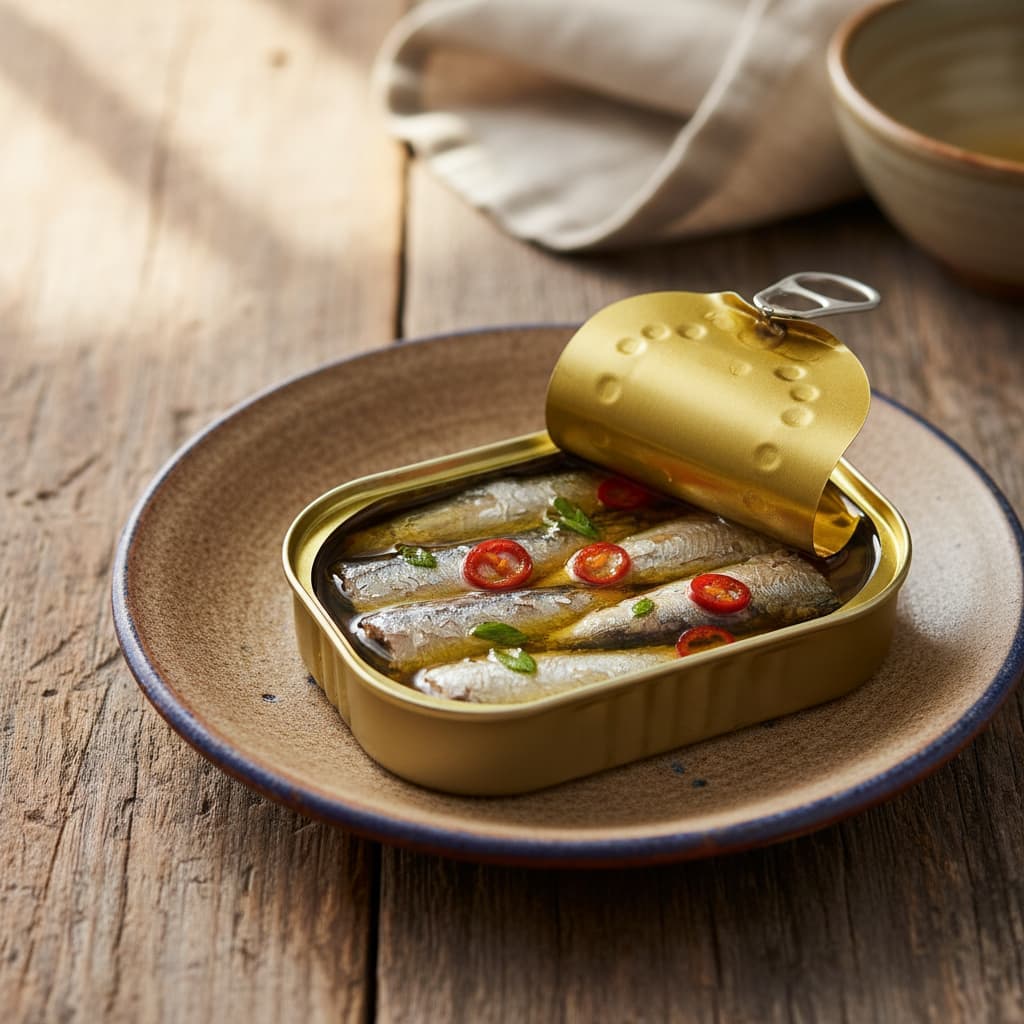
Sardines: The Most Underrated Pantry Protein
What it is
Canned sardines are small, oily fish (typically pilchards, sprats, or herring) packed in oil, water, or sauce. They're sold whole, headless, or as fillets. A standard can is 3.75 oz (106g) and contains 1-2 servings of complete protein with bones you can eat.
Why it belongs in your pantry
Sardines punch way above their weight. A single can delivers 23g of protein, 1,800mg of omega-3 fatty acids, and 35% of your daily calcium (from those soft, edible bones). They're one of the lowest-mercury fish available because they sit near the bottom of the food chain. The FDA ranks them among the "best choices" for fish consumption.
They also require zero cooking. Open the can. Eat. That matters when the power is out.
How long it actually lasts
The printed date on sardines is a "best by" date, not an expiration. Here's what that means in practice:
- Unopened, in the pantry: 3-5 years past the production date. Many sardine enthusiasts intentionally age high-quality tins for 5+ years, similar to wine.
- Unopened, past "best by" date: Generally safe for 1-2 years beyond the printed date, as long as the can is not bulging, leaking, or dented along the seams.
- Opened, refrigerated: 3-4 days. Transfer to a glass or plastic container; don't store in the opened can.
The USDA confirms that commercially canned foods stored in proper conditions remain safe indefinitely, though quality may decline after 2-5 years.
How to store it properly
Store cans in a cool, dry place between 50-70 degrees F. Avoid direct sunlight and anywhere that gets hot (above a stove, in a garage that bakes in summer). Heat accelerates quality loss. Keep cans off concrete floors in basements, which can cause rust through condensation.
Pro tip: Store sardine cans upside down and flip them every 6 months. This keeps the fish submerged in oil on all sides and prevents dry spots.
How to use it
- Straight from the can on crackers. The classic. Add a squeeze of lemon and hot sauce.
- Sardine toast. Mash onto sourdough with mustard, thinly sliced red onion, and a drizzle of the oil from the can.
- Pasta. Toss into spaghetti with garlic, chili flakes, capers, and cherry tomatoes. The sardines melt into the sauce.
- Rice bowls. Lay sardines over hot rice with soy sauce, sesame oil, and pickled ginger.
- Sardine salad. Sub them for tuna in any tuna salad recipe. Add celery, mayo, dill, and lemon juice.
- Fried rice. Break sardines into chunks and toss into day-old fried rice in the last 2 minutes.
- Emergency protein. No cooking required. Pair with crackers and peanut butter for a complete no-cook meal delivering 40+ grams of protein.
Cost per calorie
| Brand | Price (approx.) | Calories | Cost per 100 cal |
|---|---|---|---|
| Season brand (water) | $2.50 / 4.375 oz | 130 | $1.92 |
| King Oscar (olive oil) | $3.50 / 3.75 oz | 190 | $1.84 |
| Wild Planet | $3.00 / 4.4 oz | 180 | $1.67 |
| Brunswick (soybean oil) | $1.50 / 3.75 oz | 180 | $0.83 |
As a protein source, sardines cost roughly $0.11-0.15 per gram of protein. That is competitive with chicken thighs and significantly better than most fresh fish.
What to buy
Best everyday pick: Brunswick or Season brand sardines in water or olive oil. Widely available, consistent quality, and typically under $2.50 per can.
Best quality pick: King Oscar double-layer brisling sardines. Smaller fish, better texture, packed in olive oil. Worth it when you are eating them straight.
For bulk storage: Look for cases of 12-24 cans. Amazon, Costco, and Walmart all offer bulk options. A case of 12 Brunswick cans often runs $15-18.
Avoid sardines packed in cottonseed oil or "soy oil blend" if you have the choice. Olive oil or water are the most versatile for cooking.
Frequently asked questions
Are the bones safe to eat? Yes. The canning process softens the bones completely. They're the main reason sardines are so high in calcium. You won't even notice them.
Do sardines smell bad? Fresh-from-the-can sardines have a strong fish smell, no way around it. If you are smell-sensitive, start with sardines packed in olive oil with lemon. Drain and rinse them. The smell is temporary and dissipates within minutes.
Can I feed sardines to my dog? Yes. Sardines in water (no salt added) are excellent for dogs. One can per week for a medium-sized dog provides omega-3s that improve coat and joint health.
What is the white stuff in the can? That is coagulated protein. It is completely normal and safe. Similar to the white stuff that appears on cooked salmon. It is not mold.