Dried Pinto Beans: The Protein That Lasts Forever
What it is
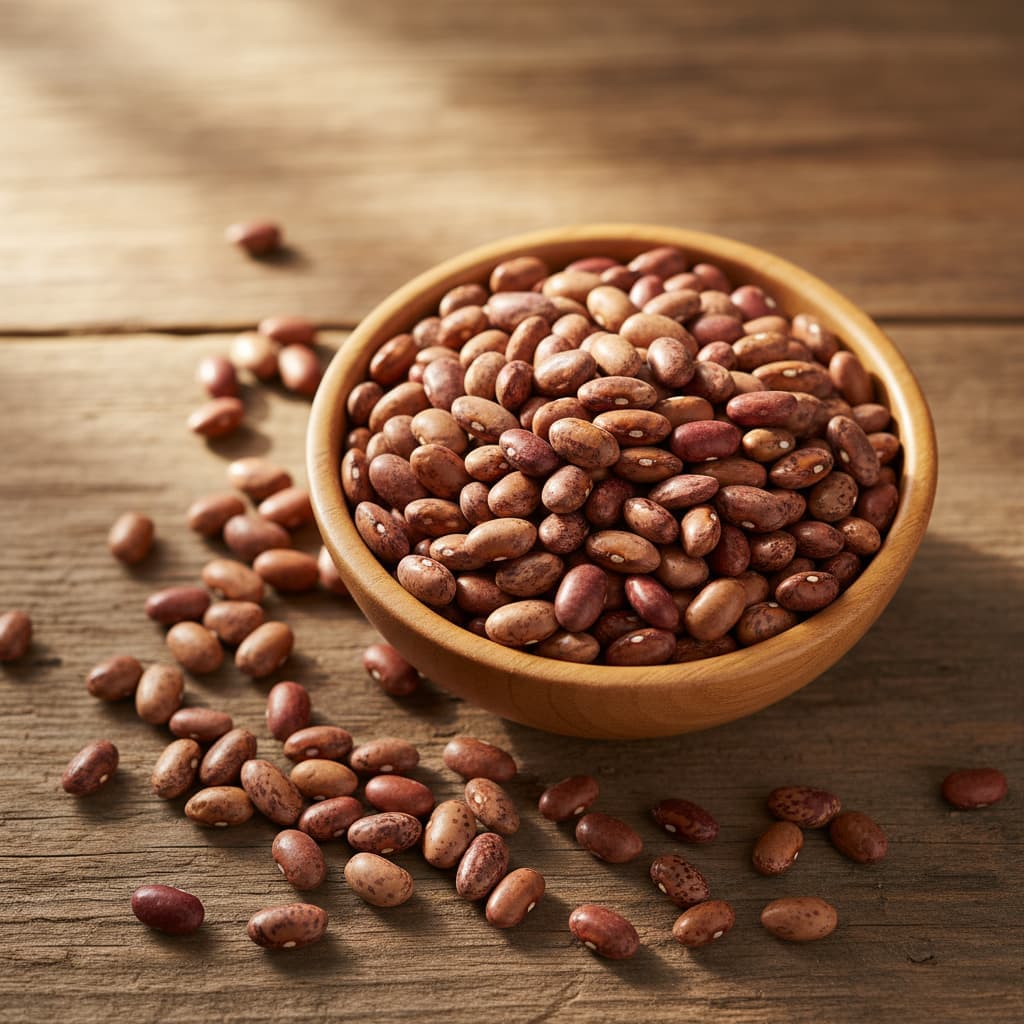
Pinto beans are medium-sized, oval-shaped dried legumes with a mottled brown and tan skin that turns solid brown when cooked. They're the most commonly consumed bean in the United States and Mexico, and the base for refried beans, chili, and dozens of Latin American staples. One pound of dried beans yields about 6 cups cooked, enough for 8-10 servings.
Why it belongs in your pantry
Dried beans are the closest thing to a perfect pantry food:
- Complete protein when paired with rice. Beans provide lysine; rice provides methionine. Together, all essential amino acids are covered.
- 22g of protein and 15g of fiber per cup cooked. That fiber keeps you full far longer than most shelf-stable foods.
- 30+ year shelf life when properly stored in Mylar with oxygen absorbers.
- Under $0.15 per serving. A 25 lb bag provides roughly 165 servings.
Beans are the reason rice-and-beans is the foundational survival food combination across cultures. There is no shelf-stable substitute that matches this nutrition profile at this cost.
How long it actually lasts
- Original packaging, pantry: 2-3 years at peak quality. Still safe beyond that but cooking time increases significantly.
- Sealed in Mylar with oxygen absorbers: 30+ years. Brigham Young University research found beans stored this way remained nutritious after 30 years, though they took longer to cook.
- Sealed in food-grade buckets: 10-20 years.
- Cooked, refrigerated: 5-7 days.
- Cooked, frozen: 6-8 months.
Note on very old beans: Beans stored for 10+ years may become "hard to cook." They're still nutritious and safe, but may need a pressure cooker to soften fully. Adding baking soda (1/4 tsp per cup) to the cooking water helps.
How to store it properly
Short-term (1-3 years): Transfer from the bag to airtight jars or containers. A cool, dark pantry works fine.
Long-term (3-30+ years): Same method as rice. Mylar bags with oxygen absorbers in 5-gallon food-grade buckets:
- One 5-gallon bucket holds about 33 lbs of dried beans.
- Use 2-3 oxygen absorbers (300cc each) per bucket.
- Seal with a clothes iron or hair straightener across the Mylar bag opening.
- Label with contents and date.
Pre-storage tip: Freeze dried beans for 72 hours before long-term storage to kill any insect eggs. This is not optional if you've bought from bulk bins.
How to use it
- Classic pinto beans. Soak overnight, drain, simmer with onion, garlic, cumin, and salt for 2-3 hours until tender. This is the base recipe for everything else.
- Refried beans. Mash cooked pintos in a skillet with oil or lard. Add garlic and chili powder. Spread on tortillas with cheese.
- Chili. Brown ground meat (canned works fine), add cooked beans, canned tomatoes, chili powder, cumin. Simmer 30 minutes.
- Bean soup. Simmer beans with broth, diced canned tomatoes, and whatever spices you have. Puree half for a creamy base, leave half chunky.
- Burritos. Beans, rice, canned salsa, cheese, wrapped in a tortilla. A complete meal from pantry staples.
- Bean patties. Mash cooked beans with breadcrumbs, egg, cumin, and garlic. Form patties and pan-fry until crispy outside.
- Rice and beans. The foundational pantry meal. Cook them separately, serve together, season with hot sauce. 400+ calories, 20g protein, all from shelf-stable ingredients.
Cost per calorie
| Source | Price | Calories (dry) | Cost per 100 cal |
|---|---|---|---|
| Store brand (1 lb bag) | $1.20 | 1,540 | $0.08 |
| Store brand (4 lb bag) | $3.80 | 6,160 | $0.06 |
| Costco (10 lb bag) | $7.50 | 15,400 | $0.05 |
| Bulk (25 lb bag) | $16.00 | 38,500 | $0.04 |
Dried beans cost $0.04-0.08 per 100 calories and $0.006-0.012 per gram of protein. That is the lowest cost per gram of protein of any food in the grocery store.
What to buy
For everyday use: Store-brand dried pinto beans in 1-4 lb bags. Goya is also reliable and widely available.
For bulk storage: 25 lb bags from restaurant supply stores, Costco, or online retailers like Azure Standard. At $16-20 per 25 lbs, you are getting roughly 165 servings for the price of a pizza delivery.
Canned vs. dried: Canned pinto beans are convenient but cost 3-5x more per serving and are much heavier/bulkier to store. For pantry building, dried is the correct choice. Keep a few cans for grab-and-go convenience.
Frequently asked questions
Do I have to soak beans overnight? Soaking cuts cooking time in half (from 3 hours to 1.5 hours) and reduces the compounds that cause gas. Quick soak method: boil beans for 2 minutes, cover, let sit 1 hour, then drain and cook normally.
Why won't my old beans soften? Beans stored for many years develop "hard seed" syndrome where the cell walls resist softening. A pressure cooker solves this completely. Add 1/4 tsp baking soda per cup of beans to the cooking water to help break down the cells.
How do I reduce the gas from beans? Soak overnight and discard the soaking water. The gas-causing oligosaccharides dissolve into the water. Also, eat beans regularly. Your gut adapts within 2-3 weeks of consistent consumption and gas decreases significantly.
Are pinto beans a complete protein? No, but they are close. They are low in methionine, which grains provide. Eating beans with rice, bread, or tortillas within the same day provides all essential amino acids. They do not need to be combined in the same meal.