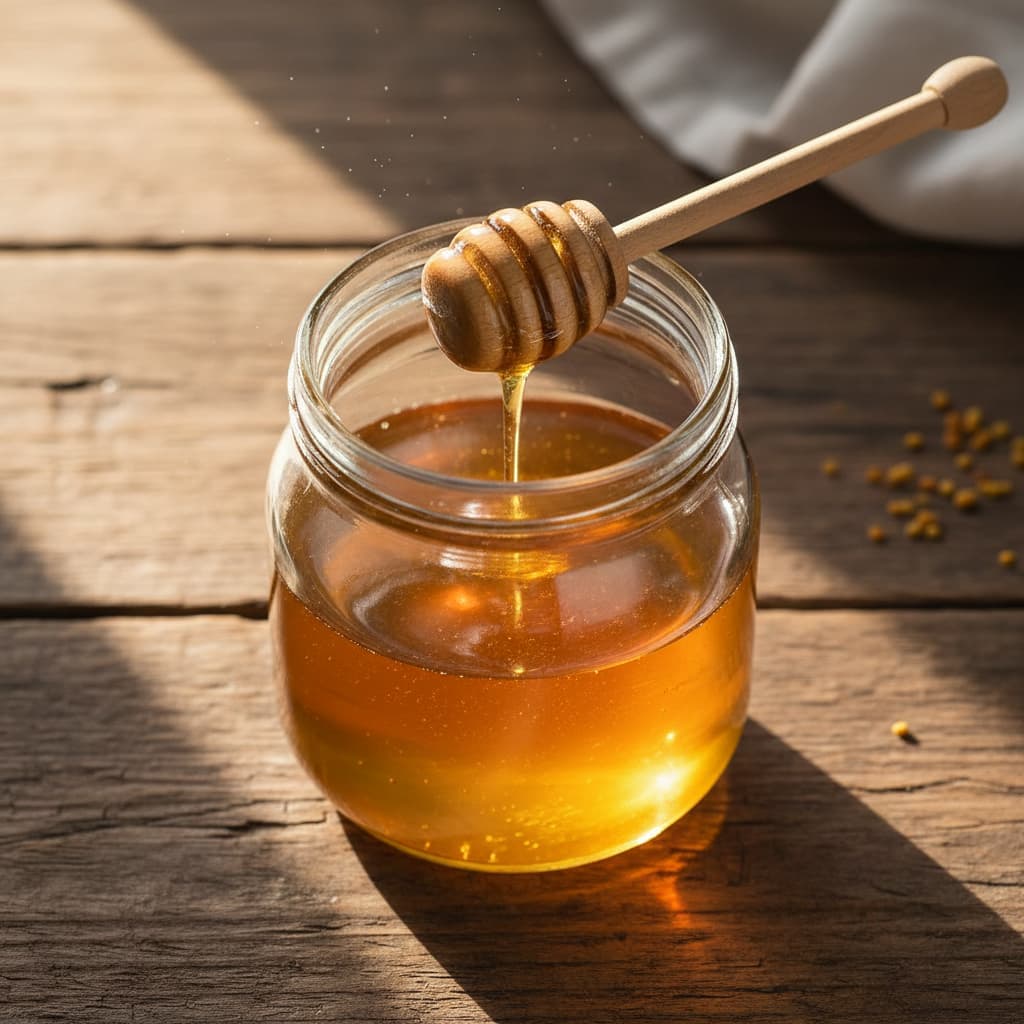
Honey: The Pantry Item That Literally Never Expires
What it is
Honey is a supersaturated sugar solution produced by honeybees from flower nectar. It consists of roughly 80% sugars (primarily fructose and glucose), 17% water, and small amounts of vitamins, minerals, enzymes, and antioxidants. One tablespoon contains 64 calories. It comes in many varieties based on the flowers the bees visited: clover (most common in the US), wildflower, acacia, buckwheat, and hundreds more.
Why it belongs in your pantry
Honey occupies a unique position in pantry storage:
- Indefinite shelf life. Not 5 years. Not 30 years. Indefinite. Properly stored honey never goes bad. Ever. This is not an exaggeration; it is chemistry.
- Natural preservative. Honey's low water activity, high acidity, and hydrogen peroxide production make it hostile to bacteria and mold.
- Sweetener, medicine, and preservative in one. It sweetens food, soothes sore throats and coughs (clinically proven to be as effective as dextromethorphan for nighttime cough), and can be used to preserve fruit.
- Energy dense. Pure simple sugars that the body converts to energy almost immediately. Useful for quick calories.
In a pantry full of foods that need seasoning and sweetening, honey solves both problems.
How long it actually lasts
- Sealed, room temperature: Indefinitely. There is no expiration. The "best by" date on honey is a regulatory requirement, not a spoilage indicator.
- Opened, room temperature: Indefinitely. Keep the lid on to prevent moisture absorption, and it lasts forever.
- Crystallized honey: Still perfectly good. Crystallization is a natural process, not spoilage. See storage section for how to fix it.
The only way to actually ruin honey is to introduce enough water to raise its moisture content above 20%, which allows fermentation. Keep water out of the jar (no wet spoons) and it cannot go bad.
How to store it properly
Store honey in its original container or any airtight glass or food-grade plastic jar. Keep it at room temperature. Do not refrigerate honey; cold temperatures accelerate crystallization without providing any preservation benefit (it already lasts forever at room temp).
To fix crystallized honey: Place the jar in a pot of warm water (120-140 degrees F, not boiling) and stir occasionally until the crystals dissolve, usually 15-20 minutes. Alternatively, microwave in 30-second bursts, stirring between each. The honey is fully restored once liquefied.
For bulk storage: Buy honey in 5 lb jugs or food-grade buckets. Transfer to smaller jars for everyday use. The bulk container will crystallize over time; this is fine and easily reversed.
How to use it
- Sweetener for oatmeal, coffee, and tea. A tablespoon of honey in hot oatmeal transforms it from bland to enjoyable.
- Honey and peanut butter sandwiches. An all-pantry meal that delivers serious calories and never gets old.
- Glaze for Spam or canned ham. Mix honey with mustard and brush on pan-fried Spam or canned ham. The caramelization is excellent.
- Cough remedy. A tablespoon of honey for adults (1/2 tablespoon for children over age 1) soothes coughs and sore throats. Multiple studies confirm it works as well as over-the-counter cough medicine.
- Bread and baking. Substitute honey for sugar in baking at a 3/4 ratio (3/4 cup honey replaces 1 cup sugar). Reduce other liquids by 2 tablespoons.
- Honey water energy drink. Mix 2 tablespoons honey into 16 oz of water. Add a pinch of salt. A simple electrolyte and energy drink.
- Fruit preservation. Honey can be used to make preserved fruits and honey syrups that last for months.
Cost per calorie
| Source | Price | Calories | Cost per 100 cal |
|---|---|---|---|
| Store brand (12 oz bear) | $4.00 | 1,088 | $0.37 |
| Store brand (32 oz) | $8.00 | 2,900 | $0.28 |
| Costco Kirkland (5 lb) | $14.00 | 7,680 | $0.18 |
| Local beekeeper (5 lb) | $25.00 | 7,680 | $0.33 |
Honey costs more than white sugar per calorie, but its indefinite shelf life, medicinal properties, and superior flavor make it worth the premium for pantry purposes.
What to buy
For storage: Any 100% pure honey. The label should say "pure honey" with no additives. Clover honey is the most common and most neutral-flavored.
Best value: Costco Kirkland Signature Organic Honey (5 lb jug). Roughly $14 for a supply that will literally outlive you.
Raw vs. processed: Raw honey retains more enzymes and beneficial compounds. Processed honey is filtered and clearer. Both last indefinitely. For storage, either works. For medicinal use, raw is preferred.
Warning: Avoid honey "blends" or "honey sauce" products that contain corn syrup or other fillers. Read the ingredient list. It should say "honey." Nothing else.
Frequently asked questions
Does honey really never expire? Correct. Honey has been found in 3,000-year-old Egyptian tombs in edible condition. Its natural properties (low moisture, high acidity, hydrogen peroxide production) prevent any microbial growth. As long as water is kept out of the jar, it lasts indefinitely.
Is crystallized honey safe? Absolutely. Crystallization is a natural process where glucose separates from the solution. It changes the texture, not the safety or nutrition. Warm it gently to return it to liquid.
Can I give honey to babies? No. Never give honey to children under 12 months old. Honey can contain Clostridium botulinum spores that cause infant botulism. Children over age 1 and adults are safe; their digestive systems can handle the spores.
Is local honey better for allergies? This is a popular belief, but clinical studies have not confirmed it. Local raw honey may contain trace amounts of local pollen, but not enough to affect allergy symptoms. Buy local honey if you want to support beekeepers, not as allergy medicine.
How much honey should I store? Plan for 5-10 lbs per person per year if it is your primary sweetener. For a family of 4, a 5 lb jug per quarter is a reasonable target.